Author Archive

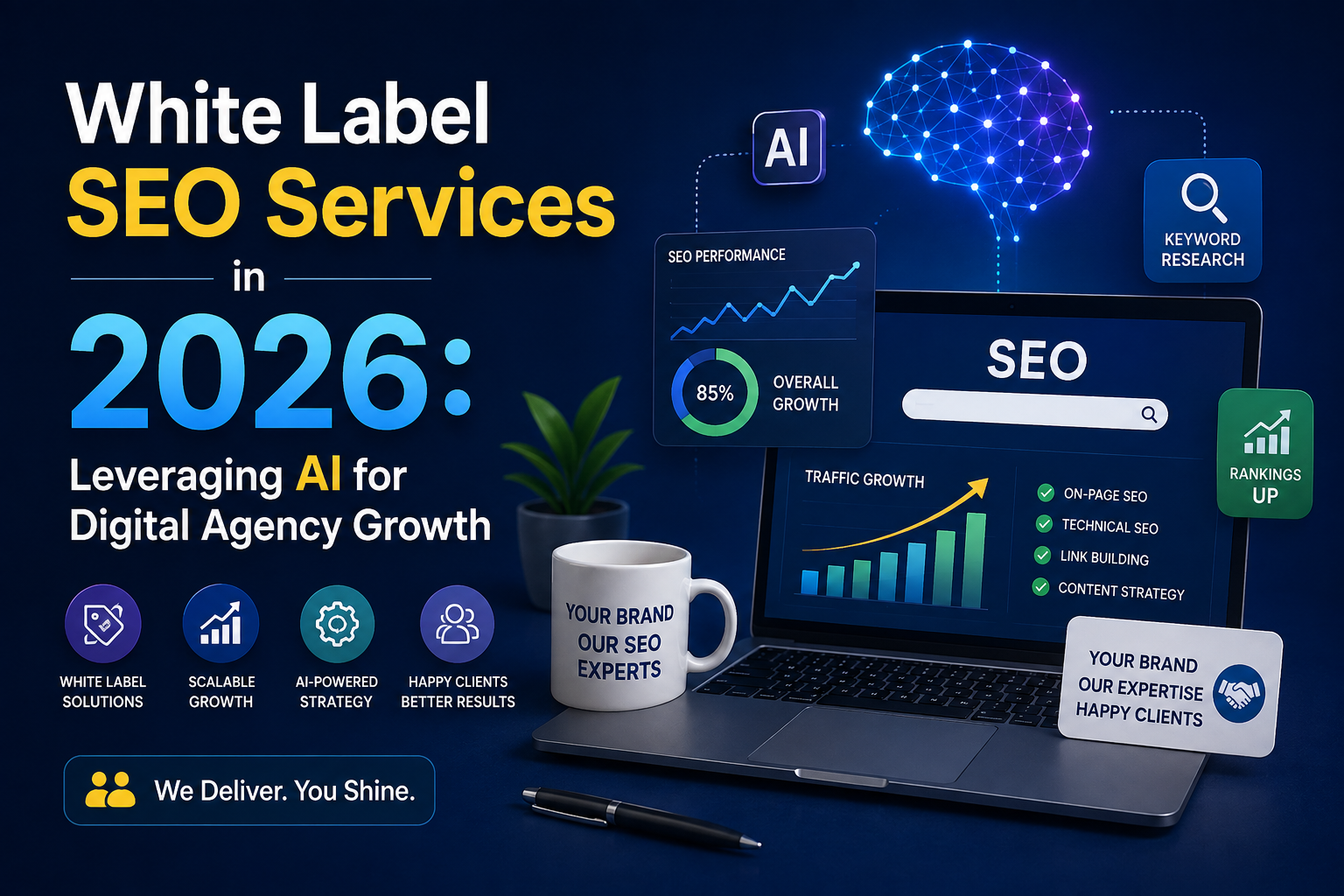
White Label SEO Services in 2026: Leveraging AI for Digital Agency Growth

Saturday, August 29th, 2026

Digital agencies are under increasing pressure to deliver measurable SEO results while managing client expectations, budgets, and growing competition. Building and maintaining an in-house SEO team can be expensive and time-consuming, especially for agencies that want to scale quickly.

This is where **white label SEO services** can make a significant difference.

In 2026, the combination of white label SEO and artificial intelligence (AI) is helping digital agencies streamline workflows, improve campaign efficiency, and offer professional SEO solutions under their own brand. Instead of hiring a large team of SEO specialists, agencies can partner with experienced SEO providers and focus their internal resources on client relationships, strategy, and business growth.

What Are White Label SEO Services?

White label SEO services allow a digital agency to outsource SEO work to a specialized provider while presenting the services to its clients under the agency’s own brand.

The SEO provider typically handles tasks such as:

  • Keyword research
  • Competitor analysis
  • Technical SEO
  • On-page optimization
  • Content optimization
  • Link building
  • Local SEO
  • SEO audits
  • Performance monitoring
  • Monthly reporting

The agency remains the primary point of contact with the client, while the white label provider works behind the scenes.

This model allows agencies to expand their service offerings without having to build every capability internally.

Why Are White Label SEO Services Important for Digital Agencies in 2026?

The SEO industry continues to evolve rapidly. Search engines are becoming more sophisticated, AI is changing how content is created and analyzed, and businesses expect SEO providers to demonstrate meaningful results.

For digital agencies, these changes create both opportunities and challenges.

A white label SEO partnership can help agencies overcome several common challenges.

Scale SEO Services Without Building a Large Team

Hiring experienced SEO professionals can require significant investment. Agencies may need SEO strategists, content specialists, technical SEO experts, link-building specialists, and account managers.

White label SEO allows agencies to access an established team without carrying the full cost of maintaining an internal department.

This makes it easier to take on more SEO clients without dramatically increasing operational expenses.

Focus on Client Relationships

SEO requires ongoing research, optimization, reporting, and monitoring. These activities can consume a significant amount of an agency’s time.

By outsourcing execution to a white label SEO partner, agencies can spend more time on:

  • Client acquisition
  • Account management
  • Business development
  • Branding
  • Strategy
  • Customer retention

The agency can remain focused on growing the business while the SEO partner manages campaign execution.

How AI Is Changing White Label SEO in 2026

AI is becoming an important part of modern SEO workflows. However, successful SEO still requires human expertise, strategic decision-making, and an understanding of the client’s business.

AI can support SEO professionals by helping them process large amounts of information and identify opportunities more efficiently.

AI-Powered Keyword Research

Traditional keyword research can involve analyzing thousands of search terms, competitors, search intent, and keyword variations.

AI-powered tools can help SEO teams organize this information and identify relevant keyword opportunities more efficiently.

Instead of simply targeting keywords with high search volume, modern SEO strategies can focus on search intent, topical relevance, user needs, and the overall context surrounding a query.

Faster Content Optimization

AI can help identify content gaps, suggest related topics, analyze existing pages, and assist with content optimization.

White label SEO providers can combine these capabilities with human editorial expertise to create content that is useful, relevant, and aligned with the client’s SEO strategy.

The goal should not be to publish large amounts of automatically generated content. The goal is to use AI to improve research, efficiency, and optimization while maintaining quality and originality.

Automated SEO Analysis

AI can also assist with analyzing SEO data and identifying potential issues.

For example, AI-assisted workflows can help teams evaluate:

  • Organic traffic trends
  • Keyword performance
  • Ranking changes
  • Content opportunities
  • Technical issues
  • Competitor activity
  • Conversion trends

This can allow SEO teams to spend less time manually processing data and more time making strategic decisions.

Key Benefits of White Label SEO for Digital Agencies

CExpand Your Service Portfolio

A web design, development, PPC, or social media agency can add SEO to its service portfolio without immediately hiring a dedicated SEO department.

This creates opportunities to increase revenue from existing clients.

For example, an agency that already provides website development can offer a complete package that includes website development, SEO, content optimization, and ongoing search visibility.

CImprove Operational Efficiency

White label SEO providers already have processes, tools, specialists, and reporting systems in place.

Agencies can take advantage of these resources instead of creating everything from scratch.

This can reduce the time required to launch new campaigns and make it easier to manage multiple clients.

CDeliver Consistent SEO Services

A reliable white label partner can provide standardized processes for audits, optimization, content, link building, and reporting.

Consistency becomes particularly important as an agency grows and manages a larger client portfolio.

CIncrease Revenue Opportunities

SEO is often a recurring service because websites require continuous optimization and monitoring.

Agencies can package white label SEO into monthly retainers, creating an additional recurring revenue stream.

This can be especially valuable for agencies looking to move beyond one-time website projects.

What Services Should a White Label SEO Partner Provide?

Before selecting a white label SEO provider, agencies should evaluate the range and quality of services available.

A comprehensive provider should ideally support areas such as:

Technical SEO

Technical SEO focuses on improving the technical foundation of a website. This may include site structure, crawlability, indexing, page performance, mobile usability, structured data, and other technical factors.

COn-Page SEO

On-page optimization can include:

  • Title tags
  • Meta descriptions
  • Headings
  • Internal linking
  • Content structure
  • Image optimization
  • Keyword targeting
  • Search intent alignment

Content Strategy

Content remains an important part of SEO. A strong strategy should focus on creating useful resources that address the questions and needs of the target audience.

A white label partner can assist with topic research, content briefs, optimization, editing, and publishing recommendations.

CLink Building

Quality backlinks can help strengthen a website’s authority and visibility. A professional white label SEO provider should use a sustainable approach rather than relying on low-quality or spammy links.

CLocal SEO

For businesses serving specific geographic areas, local SEO can be an important component of their online marketing strategy.

Services may include Google Business Profile optimization, local keyword research, citation management, local content, and reputation-related strategies.

CSEO Reporting

Professional reporting allows agencies to demonstrate the value of their SEO campaigns.

White label reports can be customized with the agency’s branding so that clients see the agency as the provider of the service.

How to Choose the Right White Label SEO Partner

Not every SEO provider will be the right fit for your agency. Before choosing a partner, consider the following factors.

Look for Proven SEO Experience

Review the provider’s experience across different industries and business models. Ask about their SEO processes, campaign management approach, and reporting capabilities.

Check Reporting and Transparency

Clear reporting is essential. You should be able to understand what work is being completed and how campaigns are progressing.

Avoid providers that make unrealistic ranking guarantees or provide vague reports.

Evaluate Scalability

Your SEO partner should be able to support you as your client base grows.

Ask whether they can manage five, twenty, or fifty clients without sacrificing quality.

Ask About AI Usage

AI can improve SEO workflows, but it should be used responsibly.

Ask how the provider uses AI for research, analysis, content optimization, and reporting. Make sure human SEO specialists remain involved in strategic decisions and quality control.

Consider White Label Branding

If the service is being sold under your agency’s brand, the provider should support your branding requirements.

This may include:

  • Custom reports
  • Agency branding
  • White label communication
  • Custom deliverables
  • Client-ready documentation

White Label SEO + AI: A Competitive Advantage

The combination of AI and white label SEO can give digital agencies a powerful operational advantage.

AI can help improve speed and efficiency, while experienced SEO professionals provide strategy, judgment, creativity, and quality control.

This combination allows agencies to potentially manage more campaigns without increasing their internal workload at the same rate.

The winning approach is not simply **AI-generated SEO**. Instead, it is **AI-assisted SEO powered by experienced professionals**.

The Future of White Label SEO for Digital Agencies

As SEO continues to evolve, agencies will need to adapt to changes in search behavior, AI-powered search experiences, content expectations, technical requirements, and competition.

White label SEO gives agencies a way to adapt without building every capability internally.

For agencies that want to scale, the model can provide access to specialized expertise, established workflows, advanced tools, and ongoing SEO support.

Meanwhile, AI can help SEO teams work more efficiently and make data-driven decisions.

Together, these capabilities can help digital agencies deliver more comprehensive services while keeping their focus on what they do best: building strong client relationships and growing their business.

Final Thoughts

White label SEO services in 2026 are more than an outsourcing solution. They can become a strategic growth model for digital agencies.

By partnering with the right SEO provider and combining human expertise with AI-powered workflows, agencies can expand their SEO offerings, improve operational efficiency, support more clients, and create new recurring revenue opportunities.

The key is choosing a white label SEO partner that prioritizes quality, transparency, scalable processes, and long-term results.

For digital agencies looking to grow without significantly expanding their internal team, white label SEO can be a practical way to deliver professional SEO services while keeping the agency’s brand at the center.

Ready to scale your agency with professional SEO services? Partner with a reliable white label SEO team and turn SEO into a scalable growth opportunity for your agency.
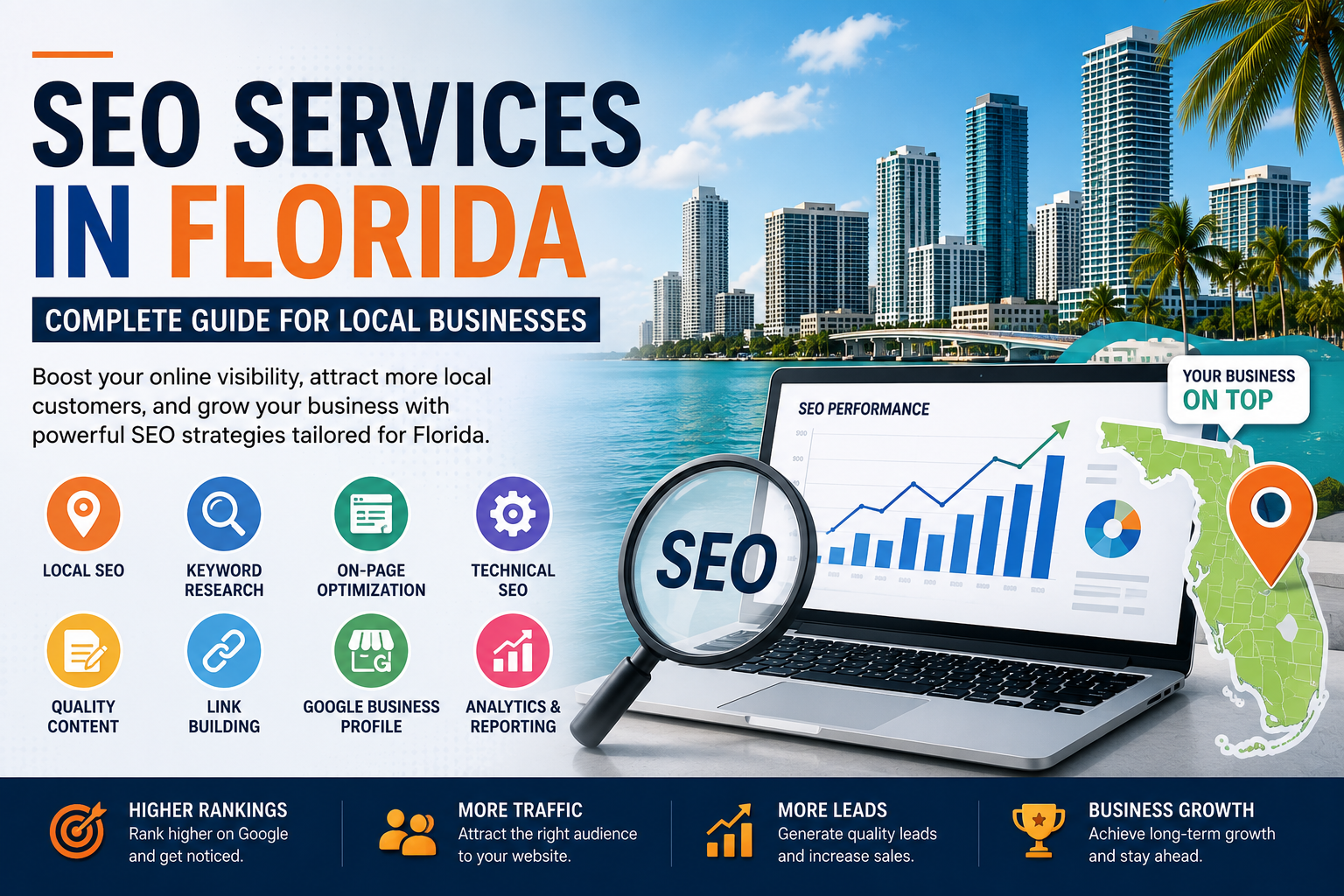
SEO Services in Florida: A Complete Guide for Local Businesses

Friday, July 31st, 2026

In today’s digital-first world, having a professional website is no longer enough. If your business isn’t visible on Google, you’re missing valuable opportunities to attract local customers. Whether you own a restaurant in Orlando, a law firm in Miami, a roofing company in Tampa, or an eCommerce business in Jacksonville, investing in professional SEO services can help your business stand out in Florida’s competitive market.

This guide explains everything local business owners need to know about SEO services in Florida and how they can improve online visibility, generate qualified leads, and increase revenue.

Why SEO Matters for Florida Businesses

Florida is one of the fastest-growing business markets in the United States. Every day, thousands of people search online for products and services near them.

Examples include:

  • Best HVAC company in Tampa
  • Miami web design agency
  • Orlando dentist
  • Jacksonville roofing contractor
  • Fort Lauderdale digital marketing agency

If your website appears on the first page of Google, you’re far more likely to receive clicks, inquiries, and sales than businesses that rank lower.

What Are SEO Services?

Search Engine Optimization (SEO) is the process of improving your website so it ranks higher on search engines like Google. Professional SEO services combine technical improvements, content optimization, and local marketing strategies to increase your website’s visibility.

WA complete SEO campaign typically includes:

  • Keyword research
  • Technical SEO audits
  • On-page optimization
  • Local SEO
  • Content marketing
  • Link building
  • Google Business Profile optimization
  • Performance tracking
  • Key SEO Services Every Florida Business Needs

1. Local SEO Optimization

Local SEO helps your business appear in Google Maps and local search results.

This includes:

  • Google Business Profile optimization
  • Local citations
  • NAP (Name, Address, Phone Number) consistency
  • Customer reviews
  • Location-specific landing pages

Local SEO is essential for businesses that serve customers within specific cities or regions across Florida.

2. Keyword Research

Successful SEO begins with identifying the right keywords.

Examples:

  • SEO Company Florida
  • Digital Marketing Florida
  • Web Design Florida
  • Local SEO Services Florida
  • Florida SEO Agency

Targeting relevant search terms ensures your website attracts visitors who are actively looking for your services.

3. On-Page SEO

On-page SEO improves every page of your website by optimizing:

  • Title tags
  • Meta descriptions
  • Header tags
  • Internal links
  • Image alt text
  • URL structure
  • Keyword placement

Well-optimized pages make it easier for search engines to understand your content.

4. Technical SEO

Technical SEO ensures your website is easy for search engines to crawl and index.

Important factors include:

  • Website speed
  • Mobile responsiveness
  • HTTPS security
  • XML sitemap
  • Robots.txt
  • Structured data (Schema Markup)
  • Core Web Vitals

A technically sound website performs better in search rankings.

5. High-Quality Content

Content is one of the strongest ranking factors.

Publishing informative blog posts, service pages, FAQs, and location-specific content helps establish authority while answering customer questions.

Examples include:

  • SEO Tips for Florida Businesses
  • Local Marketing Strategies in Florida
  • How to Improve Google Rankings
  • Website Optimization Checklist

Fresh content also increases opportunities to rank for additional keywords.

6. Link Building

Backlinks from reputable websites signal trust and authority to Google.

Effective link-building strategies include:

  • Guest blogging
  • Local business directories
  • Industry partnerships
  • Press releases
  • Resource pages

Quality backlinks often lead to stronger search rankings over time.

7. Google Business Profile Optimization

For local businesses, Google Business Profile is one of the most valuable marketing tools.

An optimized profile includes:

  • Accurate business information
  • Business categories
  • High-quality photos
  • Customer reviews
  • Business updates
  • Frequently asked questions

A complete profile improves visibility in local search and Google Maps.

Benefits of Hiring an SEO Agency in Florida

Working with an experienced SEO agency offers several advantages:

  • Improved Google rankings
  • Increased organic traffic
  • More qualified leads
  • Better local visibility
  • Higher return on investment
  • Stronger brand credibility
  • Long-term business growth

Unlike paid advertising, SEO continues delivering results long after optimization work is completed.

Common SEO Mistakes to Avoid

Many businesses struggle because they:

  • Ignore local SEO
  • Target overly broad keywords
  • Publish duplicate content
  • Have slow-loading websites
  • Skip mobile optimization
  • Neglect Google Business Profile
  • Fail to monitor SEO performance

Avoiding these mistakes can significantly improve your online visibility.

Choosing the Right SEO Company in Florida

When selecting an SEO provider, look for:

  • Proven experience
  • Transparent reporting
  • Customized strategies
  • Ethical (white-hat) SEO practices
  • Strong client reviews
  • Local SEO expertise

A reliable SEO partner will focus on sustainable growth rather than quick, risky tactics.

Final Thoughts

SEO is one of the most effective long-term digital marketing strategies for Florida businesses. Whether you operate a local service company, retail store, healthcare practice, or eCommerce brand, investing in professional SEO can help you reach more customers, improve search rankings, and grow your business.

With the right combination of local SEO, technical optimization, high-quality content, and ongoing performance monitoring, your business can build a strong online presence and stay ahead of the competition.

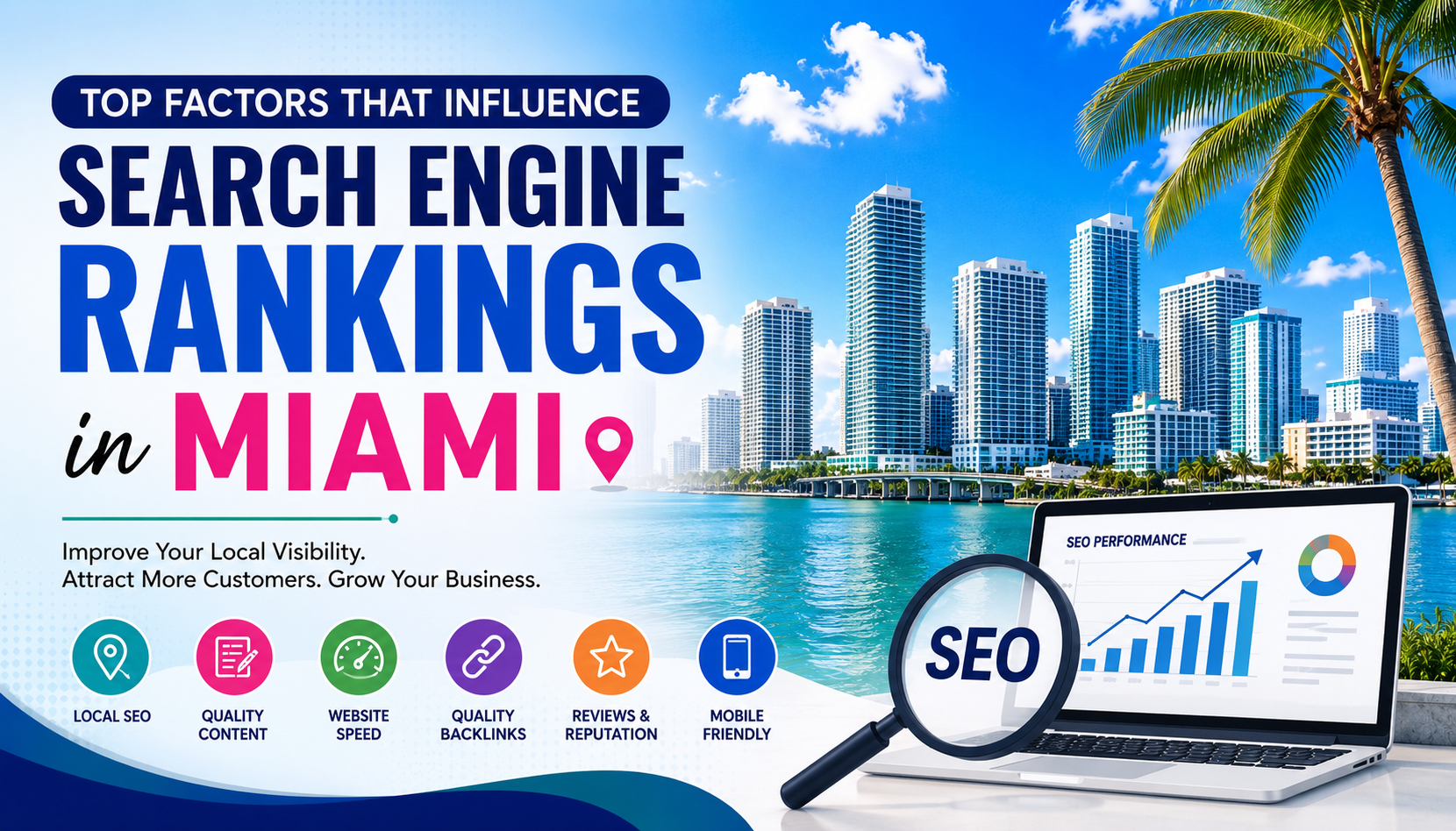
Top Factors That Influence Search Engine Rankings in Miami

Saturday, July 18th, 2026

Top Factors That Influence Search Engine Rankings in Miami

If you’re a business owner in Miami, having a website is only the first step toward building an online presence. To attract local customers and stay ahead of the competition, your website needs to rank well on Google. With thousands of businesses competing for visibility, understanding the factors that influence search engine rankings is essential.

In this guide, we’ll explore the key SEO factors that can help your website achieve higher rankings in Miami and drive more local traffic.

1. Optimize for Local SEO

Local SEO is one of the most important ranking factors for businesses targeting customers in Miami. Search engines prioritize businesses that are relevant to a user’s location.

To improve your local rankings:

Claim and optimize your Google Business Profile.
Use consistent Name, Address, and Phone Number (NAP) information across all directories.
Include location-specific keywords like “Miami SEO Services” or “Web Design in Miami.”
Encourage satisfied customers to leave Google reviews.

2. Publish High-Quality, Localized Content

Content remains one of Google’s strongest ranking signals. Creating valuable, informative, and location-focused content helps establish your authority and relevance.

Ideas for localized content include:

  • Miami business guides
  • Local industry trends
  • Event-related blog posts
  • Customer success stories
  • Frequently asked questions from Miami customers

Fresh, informative content encourages visitors to stay longer on your website and increases your chances of ranking higher.

3. Ensure Your Website Is Mobile-Friendly

Most local searches happen on smartphones. Google uses mobile-first indexing, meaning it primarily evaluates the mobile version of your website.

A mobile-friendly website should:

  • Load quickly
  • Display properly on all screen sizes
  • Have easy-to-read text
  • Feature simple navigation
  • Include clickable buttons and contact information

A positive mobile experience improves both rankings and conversions.

4. Improve Website Speed

Page speed is a confirmed ranking factor. Slow-loading websites often experience higher bounce rates and lower user engagement.

To improve website speed:

  • Compress images
  • Enable browser caching
  • Minimize CSS and JavaScript files
  • Use a Content Delivery Network (CDN)
  • Choose reliable web hosting

Fast websites create a better user experience and are favored by search engines.

5. Optimize On-Page SEO

Every page on your website should be optimized for relevant keywords without overusing them.

Key on-page SEO elements include:

  • SEO-friendly page titles
  • Compelling meta descriptions
  • Proper heading structure (H1, H2, H3)
  • Image alt text
  • Internal linking
  • Clean, descriptive URLs

These elements help search engines understand your content and improve your visibility.

6. Build High-Quality Backlinks

Backlinks from reputable websites act as votes of confidence for your site. The more high-quality backlinks you earn, the more trustworthy your website appears to Google.

Effective ways to build backlinks include:

  • Guest blogging
  • Local business partnerships
  • Directory listings
  • Press releases
  • Publishing valuable resources others want to reference

Focus on quality over quantity when building links.

7. Maintain a Strong Online Reputation

Customer reviews influence both local rankings and consumer trust. Positive reviews signal credibility and reliability.

Encourage customers to:

Leave Google reviews
Share feedback on trusted review platforms
Rate your services honestly

Responding professionally to reviews—both positive and negative—demonstrates strong customer service.

8. Focus on User Experience (UX)

Google rewards websites that provide a positive experience for visitors.

Improve your user experience by:

  • Making navigation intuitive
  • Reducing intrusive pop-ups
  • Using clear calls-to-action
  • Organizing content for readability
  • Ensuring all pages function properly

A seamless browsing experience keeps users engaged and supports better rankings.

9. Use Structured Data (Schema Markup)

Schema markup helps search engines understand your content more effectively and can enhance your search listings with rich results.

Businesses can use schema to display:

  • Business information
  • Reviews
  • FAQs
  • Services
  • Contact details

These enhanced search results can improve click-through rates and visibility.

10. Keep Your Website Updated

SEO is an ongoing process. Regularly updating your website with fresh content, new service pages, and technical improvements signals that your site remains active and relevant.

Review your website periodically to:

  • Fix broken links
  • Update outdated content
  • Improve page performance
  • Add new blog posts
  • Monitor keyword performance

Consistent optimization helps maintain and improve your search rankings over time.

Final Thoughts

Achieving higher search engine rankings in Miami requires more than simply adding keywords to your website. Success comes from combining strong local SEO, valuable content, technical optimization, quality backlinks, and an excellent user experience.

By consistently improving these areas, your business can increase its online visibility, attract more qualified local customers, and build long-term success in Miami’s competitive digital landscape.

Need help improving your website’s rankings in Miami? Partner with an experienced SEO team to develop a customized strategy that drives sustainable growth and delivers measurable results.

The Ultimate Website Owner’s Guide to the Google May 2026 Core Update

Wednesday, July 1st, 2026

Google’s May 2026 Core Update is one of the most significant algorithm updates of the year. Officially launched on May 21, 2026, the rollout lasted nearly 12 days, completing on June 2, 2026. Like previous broad core updates, its primary goal was to improve search quality by surfacing the most relevant, helpful, and trustworthy content across the web.

For many website owners, the update resulted in noticeable ranking fluctuations, traffic changes, and shifts in keyword visibility. If your website experienced gains—or losses—this guide explains what changed, why it matters, and what you should do next.

What Is the Google May 2026 Core Update?

A Google Core Update is a broad improvement to Google’s ranking systems. Unlike spam updates or manual penalties, core updates are not designed to punish specific websites.

Instead, Google recalibrates how it evaluates content quality, relevance, authority, and user satisfaction. As a result:

Some websites gain visibility.

Others lose rankings.

Many sites experience temporary fluctuations during the rollout.

Google described the May 2026 update as a regular core update designed to better surface relevant and satisfying content for searchers across all types of websites.

Timeline of the May 2026 Core Update

Event Date Rollout Started May 21, 2026 Estimated Duration About 2 weeks Rollout Completed June 2, 2026 Total Rollout Time Approximately 12 days

This became the second major core update of 2026, following the March Core Update.

Why Did Google Release This Update?

Google continuously improves Search to ensure users receive:

  • More accurate answers
  • More useful content
  • Better expert information
  • Fewer low-value pages
  • Higher-quality user experiences

The May update arrived shortly after Google I/O 2026, where Google announced major AI-driven improvements to Search. While Google has not confirmed a direct connection between the core update and these AI changes, many SEO professionals believe the timing reflects Google’s broader effort to improve search quality in an AI-powered Search environment.

Who Was Most Affected?

The update impacted websites across nearly every industry, including:

  • Blogs
  • News websites
  • E-commerce stores
  • SaaS businesses
  • Local businesses
  • Educational websites
  • Healthcare websites
  • Finance websites

No single niche was specifically targeted.

Instead, Google reassessed content quality across all industries.

Common Ranking Changes Website Owners Observed

Many SEO tracking tools reported significant volatility throughout the rollout. Common observations included:

Increased Ranking Volatility

Keywords moved significantly over several days before stabilizing.

Traffic Gains

Websites with strong topical authority, comprehensive content, and established trust often saw increased visibility.

Traffic Drops

Sites relying on thin, outdated, repetitive, or heavily scaled content experienced declines.

AI Overview Changes

Some publishers also reported changes in how their pages appeared within AI-powered Search features, although Google did not provide specific details linking these changes to the core update.

Signs Your Website Was Impacted

Check Google Search Console for:

  • Sudden drops in impressions
  • Lower organic clicks
  • Ranking declines across multiple pages
  • Keyword position changes
  • Reduced visibility for previously high-performing pages

Remember that temporary fluctuations during a rollout are normal. Google advises waiting until the rollout has fully completed before evaluating performance.

What Google Recommends

Google has consistently advised website owners not to make immediate changes while a core update is still rolling out.

Instead:

Wait until rankings stabilize.
Compare performance before and after the update.
Identify pages with sustained declines.
Focus on improving content quality rather than looking for technical “fixes.”

How to Recover After the May 2026 Core Update

1. Improve Content Quality

Ask yourself:

Does this page answer the user’s question completely?
Is the information current?
Is the content original?
Does it provide unique insights?

Avoid publishing content that simply repeats what’s already available elsewhere.

2. Strengthen Topical Authority

Rather than publishing hundreds of unrelated articles, build expertise around your core subject.

For example:

Instead of writing about everything in digital marketing, focus on one area such as:

SEO
Content Marketing
Local SEO
Technical SEO

Create interconnected content clusters that comprehensively cover the topic.

3. Demonstrate Experience and Expertise

Google increasingly rewards content that reflects real-world knowledge.

Ways to improve include:

Original screenshots
Case studies
Personal testing
Expert commentary
First-hand experiences
Research-backed insights

4. Refresh Older Content

Update articles by:

Removing outdated information
Adding recent statistics
Expanding thin sections
Improving readability
Fixing broken links
Updating images

Freshness alone isn’t a ranking factor, but maintaining accurate, useful content improves user satisfaction.

5. Improve User Experience

Core Web Vitals remain important.

Review:

Page speed
Mobile usability
Layout stability
Navigation
Readability
Internal linking

A good user experience helps visitors engage with your content.

6. Build Trust

Google values websites that demonstrate credibility.

Include:

Author bios
Contact information
Editorial policies
About page
HTTPS security
Clear sourcing for factual claims

These elements help users and search engines assess your site’s trustworthiness.

7. Avoid Shortcuts

The May 2026 update reinforces Google’s long-term direction.

Avoid:

Keyword stuffing
Thin AI-generated pages
Duplicate content
Mass-produced articles without editorial review
Manipulative link-building schemes

Google continues to emphasize content that is genuinely useful to people.

Should You Delete Low-Performing Pages?

Not necessarily.

Before deleting content:

Improve it.
Merge overlapping articles.
Add unique value.
Update outdated information.

Delete pages only if they are truly obsolete or provide no value.

SEO Checklist After the May 2026 Core Update

✅ Review Google Search Console data

✅ Compare traffic before and after June 2

✅ Update outdated content

✅ Improve internal linking

✅ Enhance author expertise

✅ Remove duplicate content

✅ Improve page speed

✅ Add original visuals and examples

✅ Strengthen topic clusters

✅ Continue publishing high-quality content consistently

Frequently Asked Questions
Was this a penalty update?

No. Core updates are not penalties. They reassess how Google’s systems rank content across the web.

How long did the rollout last?

The rollout started on May 21, 2026, and completed on June 2, 2026, lasting nearly 12 days.

Should I make immediate SEO changes after a ranking drop?

It’s better to wait until the rollout has completed and then evaluate trends using Google Search Console.

Does Google target AI-generated content?

Google focuses on content quality rather than how it is produced. However, low-value, unhelpful, or mass-produced content—whether AI-generated or not—is less likely to perform well. Recent policy updates also explicitly address attempts to manipulate AI-powered search systems.

Final Thoughts

The Google May 2026 Core Update reinforces a familiar message: websites that prioritize helpful, original, and trustworthy content are better positioned for long-term success. While ranking fluctuations can be frustrating, broad core updates are an opportunity to assess your content objectively and improve it for real users—not just search engines.

Rather than chasing algorithm changes, invest in creating content that demonstrates expertise, answers users’ questions comprehensively, and offers genuine value. Over time, that strategy is the most resilient approach to succeeding in Google Search.

How Enterprise SEO Services Transform Search Performance at Scale

Friday, June 19th, 2026

Introduction

In today’s digital-first economy, enterprise organizations face unique challenges when it comes to search engine optimization. Managing thousands—or even millions—of web pages across multiple regions, languages, and business units requires a sophisticated SEO strategy that goes beyond traditional optimization techniques. This is where enterprise SEO services become essential.

Enterprise SEO is designed specifically for large-scale websites and global brands seeking sustainable organic growth, improved search visibility, and a competitive advantage in increasingly crowded markets. By combining advanced technology, data-driven insights, and scalable optimization frameworks, enterprise SEO helps organizations maximize their online presence and drive measurable business results.

What Are Enterprise SEO Services?

Enterprise SEO services are specialized search engine optimization solutions tailored to large organizations with complex websites and extensive digital ecosystems. Unlike standard SEO campaigns that focus on a limited number of pages, enterprise SEO addresses the challenges of managing optimization across vast website structures.

These services typically include:

  • Technical SEO audits and implementation
  • Large-scale content optimization
  • Website architecture improvements
  • International SEO management
  • Keyword portfolio expansion
  • Automation and workflow optimization
  • Advanced analytics and reporting
  • Link-building and authority development

The primary goal is to create a scalable SEO framework that supports long-term growth while maintaining consistency across multiple markets and business units.

Why Global Brands Need Enterprise SEO

Managing Large Website Structures

Enterprise websites often contain thousands of product pages, category pages, blog posts, and resource sections. Without a strategic SEO approach, search engines may struggle to crawl, index, and rank this content effectively.

Enterprise SEO ensures that website architecture, internal linking, and technical performance are optimized to improve discoverability and search engine accessibility.

Supporting International Growth

Global brands frequently operate across multiple countries and languages. Enterprise SEO helps businesses implement localization strategies, multilingual optimization, and regional targeting to improve visibility in international search markets.

This includes:

  • Hreflang implementation
  • Country-specific keyword research
  • Localized content strategies
  • International site structure optimization

Enhancing User Experience

Search engines increasingly prioritize user experience as a ranking factor. Enterprise SEO services focus on improving:

  • Page speed
  • Mobile usability
  • Core Web Vitals
  • Site navigation
  • Content accessibility

These improvements not only enhance rankings but also contribute to better customer engagement and higher conversion rates.

Key Components of a Successful Enterprise SEO Strategy

Technical SEO Excellence

Technical SEO serves as the foundation of enterprise search success. Large websites often face challenges such as duplicate content, crawl budget inefficiencies, broken links, and indexing issues.

Enterprise SEO teams conduct comprehensive audits to identify and resolve technical barriers that may limit search performance.

Scalable Content Optimization

Content remains one of the most influential ranking factors. Enterprise SEO focuses on optimizing existing content while creating scalable processes for future content development.

This includes:

  • Content gap analysis
  • Keyword mapping
  • Topic clustering
  • Content governance
  • AI-assisted optimization workflows

A well-executed content strategy helps brands capture traffic across every stage of the customer journey.

Data-Driven Decision Making

Enterprise organizations generate enormous amounts of data. Enterprise SEO leverages advanced analytics platforms to identify growth opportunities, monitor performance trends, and measure ROI.

Important metrics include:

  • Organic traffic growth
  • Keyword rankings
  • Conversion rates
  • Revenue attribution
  • Search visibility scores
  • User engagement metrics

These insights allow businesses to prioritize high-impact initiatives and continuously refine their SEO strategy.

Automation and SEO Technology

Manual optimization becomes impractical at enterprise scale. Modern enterprise SEO services utilize automation tools and platforms to streamline workflows and improve efficiency.

Automation can support:

  • Site audits
  • Metadata generation
  • Reporting
  • Keyword monitoring
  • Content recommendations
  • Technical issue detection

This allows SEO teams to focus on strategic initiatives rather than repetitive tasks.

Benefits of Enterprise SEO Services

Increased Organic Visibility

A comprehensive enterprise SEO strategy helps brands secure higher rankings across thousands of relevant keywords, resulting in greater visibility and market share.

Sustainable Traffic Growth

Unlike paid advertising, organic search generates long-term traffic without ongoing media spend. Enterprise SEO creates a foundation for sustainable growth that compounds over time.

Improved Brand Authority

Consistent search visibility establishes trust and credibility among consumers. High-ranking content positions brands as industry leaders and authoritative sources of information.

Higher Return on Investment

Enterprise SEO often delivers one of the strongest long-term returns among digital marketing channels. As organic visibility increases, customer acquisition costs typically decrease while revenue opportunities expand.

Competitive Advantage

Large organizations operate in highly competitive markets. Enterprise SEO provides the insights and optimization strategies needed to outperform competitors in search results and capture valuable market demand.

Common Challenges in Enterprise SEO

Despite its benefits, enterprise SEO comes with unique complexities:

  • Organizational silos
  • Multiple stakeholder approvals
  • Legacy website infrastructure
  • Frequent site updates
  • Large-scale content management
  • International compliance requirements

Successful enterprise SEO programs address these challenges through cross-functional collaboration, governance frameworks, and clear performance measurement.

Choosing the Right Enterprise SEO Partner

Selecting the right SEO agency or service provider is critical for success. Organizations should look for partners that offer:

  • Proven enterprise-level experience
  • Technical SEO expertise
  • International SEO capabilities
  • Advanced analytics and reporting
  • Scalable processes and automation
  • Transparent communication

A strong enterprise SEO partner acts as a strategic advisor, helping organizations align search optimization efforts with broader business objectives.

Conclusion

Enterprise SEO services have become a fundamental growth driver for global brands operating in competitive digital environments. By combining technical excellence, scalable content strategies, automation, and data-driven decision-making, enterprise SEO enables organizations to achieve sustainable organic growth and maximize their online visibility.

As search engines continue to evolve and digital competition intensifies, businesses that invest in enterprise SEO will be better positioned to attract qualified traffic, strengthen brand authority, and drive long-term business success. For global brands seeking scalable growth, enterprise SEO is no longer optional—it is a strategic necessity.

Unlock Higher Google Rankings and More Customers with Florida SEO Experts

Friday, June 12th, 2026

In today’s competitive digital landscape, having a website is only the first step. To attract potential customers and grow your business, your website needs to be visible where people are searching — on Google. This is where professional SEO services in Florida can make a significant difference.

Why SEO Matters for Your Business

Search Engine Optimization (SEO) is the process of improving your website’s visibility in search engine results. When your website ranks higher on Google, you gain more traffic, generate qualified leads, and increase opportunities for sales and growth.

Studies show that most users rarely look beyond the first page of search results. If your business isn’t ranking well, you may be missing valuable customers who are actively searching for your products or services.

Benefits of Professional SEO Services

Higher Search Engine Rankings

Expert SEO strategies help your website rank for relevant keywords, making it easier for potential customers to find your business online.

Increased Organic Traffic

SEO drives targeted visitors to your website without the ongoing costs associated with paid advertising.

Better User Experience

A well-optimized website loads faster, is mobile-friendly, and provides a seamless experience for visitors, which can improve engagement and conversions.

More Qualified Leads

SEO targets users who are already searching for the services you offer, resulting in higher-quality leads and better conversion rates.

Long-Term Business Growth

Unlike short-term marketing tactics, SEO provides sustainable results that continue to generate traffic and leads over time.

Our Florida SEO Services Include

  • Comprehensive SEO Audits
  • Keyword Research & Strategy
  • On-Page SEO Optimization
  • Technical SEO Improvements
  • Local SEO for Florida Businesses
  • Content Optimization
  • Link Building & Authority Growth
  • Google Business Profile Optimization
  • Monthly Performance Reporting

Why Choose Professional SEO Experts?

Successful SEO requires experience, strategy, and continuous optimization. Search engine algorithms are constantly evolving, making it essential to work with professionals who stay updated with the latest trends and best practices.

By partnering with an experienced SEO team, businesses can focus on their operations while experts handle the technical and strategic aspects of improving online visibility.

Get Ahead of Your Competition

Whether you’re a local business, startup, or established company in Florida, investing in professional SEO services can help you outperform competitors, attract more customers, and build a stronger online presence.

Don’t let your website get lost in search results. Start improving your rankings today with expert SEO services designed to drive measurable results and long-term growth.

Conclusion

SEO is one of the most effective digital marketing investments a business can make. With the right strategy, your website can achieve higher Google rankings, attract targeted traffic, and generate consistent business growth.

If you’re ready to increase your visibility and grow your business online, professional SEO services in Florida can help you reach your goals faster and more effectively.

WordPress eCommerce Projects: Empowering Businesses with Scalable Online Stores

Friday, June 5th, 2026

In today’s digital-first marketplace, having a powerful online store is no longer optional—it’s essential. WordPress, combined with WooCommerce, has become one of the most trusted platforms for building scalable, user-friendly, and feature-rich eCommerce websites for businesses of all sizes.

Why Choose WordPress for eCommerce?

WordPress powers over 40% of websites worldwide, making it the most popular content management system available today. When integrated with WooCommerce, it transforms into a robust eCommerce solution capable of handling everything from small online shops to large-scale retail operations.

Key benefits include:

  • Easy product management
  • Mobile-responsive design
  • Secure payment gateway integration
  • SEO-friendly architecture
  • Customizable themes and functionality
  • Scalability for business growth
  • Cost-effective development and maintenance

Key Features of a Successful WordPress eCommerce Project

1. Responsive Website Design

Modern customers shop across multiple devices. A responsive eCommerce website ensures a seamless shopping experience on desktops, tablets, and smartphones.

2. Product Catalog Management

A well-organized product catalog allows customers to easily browse products, view specifications, compare options, and make informed purchasing decisions.

3. Secure Payment Integration

Integrating trusted payment gateways such as PayPal, Stripe, Razorpay, and credit card processors enhances customer confidence and simplifies transactions.

4. Inventory Management

Real-time inventory tracking helps businesses manage stock levels efficiently while preventing overselling and order fulfillment issues.

5. Search Engine Optimization (SEO)

WordPress offers excellent SEO capabilities, helping online stores rank higher on search engines and attract organic traffic.

6. Customer Account Management

Personalized customer dashboards allow users to track orders, manage addresses, view purchase history, and improve overall customer engagement.

Common WordPress eCommerce Project Types

Fashion & Apparel Stores

Online clothing stores featuring product variations, size guides, customer reviews, and inventory management.

Electronics & Technology Stores

Product-rich websites with advanced filtering, technical specifications, and secure checkout systems.

Health & Wellness Stores

eCommerce platforms selling healthcare products, supplements, fitness equipment, and wellness services.

Beauty & Cosmetics Stores

Visually appealing online stores focused on product presentation, promotions, and customer loyalty.

Multi-Vendor Marketplaces

Platforms allowing multiple sellers to manage products and sales through a centralized system.

Business Benefits

A professionally developed WordPress eCommerce website helps businesses:

  • Increase online sales
  • Expand market reach
  • Improve customer experience
  • Streamline operations
  • Enhance brand credibility
  • Generate long-term revenue growth

Conclusion

WordPress eCommerce projects provide businesses with a flexible, scalable, and cost-effective solution for selling products and services online. Whether launching a new online store or upgrading an existing platform, WordPress and WooCommerce offer the tools needed to create a secure, high-performing, and customer-focused eCommerce experience.

Investing in a professionally developed WordPress eCommerce website is an investment in sustainable business growth and digital success.

The Freshness Effect: Why AI Search Prefers Dynamic and Current Knowledge

Saturday, May 30th, 2026

Not long ago, a well-crafted guide could function like a durable digital asset. Once published, it could attract backlinks, generate steady traffic, and require only occasional updates to remain effective. This was the essence of evergreen SEO: create valuable content once, maintain it lightly, and enjoy long-term visibility. Even as the content aged, its rankings often remained stable because search engines viewed established authority as a signal of trust and reliability.

The traditional SEO model is changing. In the past, users would sift through multiple search results, deciding for themselves which sources were trustworthy and up to date. Today, AI-powered search experiences are increasingly making those decisions on the user’s behalf. Platforms such as Google AI Overviews, ChatGPT, Perplexity, Gemini, Copilot, and enterprise retrieval systems analyze information from numerous sources, evaluate relevance and recency, and deliver a summarized answer before a user ever visits a website.

As these AI-generated responses become more common, the conventional path from search result to website visit is shrinking. Research has shown a noticeable decline in clicks when AI-generated summaries are present. Instead of navigating to several pages, users often receive enough information directly within the search interface or chat experience to satisfy their needs.

However, the real transformation extends beyond declining traffic. AI systems are changing the characteristics that make content valuable. Historically, a detailed and authoritative article could maintain strong visibility for years. Today, completeness alone is no longer enough. Content that appears outdated, even if it was once highly regarded, may lose favor because AI systems place greater emphasis on evidence that information is actively maintained.

This shift has elevated the importance of structured, frequently updated sources. Databases, directories, government portals, product feeds, and regulatory dashboards often provide signals that machines can easily verify. In many cases, these resources may be considered more reliable than a polished report that is updated only once a year. AI systems are constantly evaluating a simple question: which source is most likely to reflect current reality?

For that reason, content freshness should be viewed as more than a publication date or an occasional edit. It serves as a signal of ongoing credibility. Modern AI systems look for proof that information is actively monitored, validated, and aligned with current conditions. They seek consistency across trusted sources and evidence that the underlying knowledge continues to evolve.

In the AI search era, authority is no longer built solely on what you published in the past. It increasingly depends on demonstrating that your information remains accurate, relevant, and alive today.

Why Content Freshness Is Now a Measure of Trust

For years, SEO rewarded authority that accumulated over time. A page earned backlinks, social mentions, user engagement, citations, and internal references, gradually strengthening its position in search results. The longer these signals accumulated, the more resilient the page became. This encouraged businesses to create comprehensive resources and allow them to generate value for years with only occasional maintenance.

In many cases, that approach still works. Educational content covering subjects such as accounting principles, compound interest, or web development fundamentals remains relevant for long periods because the underlying concepts change very little. The challenge arises when organizations assume that all content ages at the same pace.

Search engines have long recognized that different topics require different levels of recency. Some searches naturally demand the latest information. Users looking for details about a newly released film, a major weather event, or a market-moving announcement expect current results, not information that was accurate months or years ago.

This principle has existed in search ranking systems for over a decade. Search engines introduced freshness-focused algorithms to better surface recent information for breaking news, recurring events, and topics that change frequently. For SEO professionals, the distinction was relatively clear: industries such as news, sports, finance, and current events required constant updates, while educational and reference content could remain useful for much longer periods.

AI-powered search experiences are changing that framework. Modern answer engines are being used for a much wider range of decisions, many of which depend on current conditions rather than timeless facts.

A business owner evaluating payroll solutions for international hiring needs information that reflects today’s regulations and pricing. A startup founder assessing remote hiring strategies needs insight based on current labor markets and operating costs. Healthcare questions may require the latest safety guidance, while financial decisions often depend on present-day economic conditions.

These topics are not traditional news stories, yet outdated information can still lead to poor decisions. As a result, freshness has evolved beyond a simple ranking consideration. It increasingly functions as a trust signal that helps AI systems determine whether a source remains relevant enough to be included in an answer.

Authority still plays an important role, particularly in specialized and highly regulated industries. However, modern AI retrieval systems evaluate more than reputation alone. They also look for signs that information is actively maintained and reflects current reality.

A respected report published several years ago may continue to provide valuable context, but when users need guidance for present-day decisions, AI systems often favor recently updated sources, official databases, live dashboards, and current datasets. The goal is not merely to identify authoritative information—it is to identify authoritative information that remains current and dependable at the moment the question is asked.

Empowering SMEs and startups with global innovation and specific talent solutions.

Sunday, May 24th, 2026

Could AI truly reach human-level capability within the next five years?

That question sits at the heart of the growing debate around Artificial General Intelligence (AGI). Unlike today’s AI systems, which are designed for specific tasks, AGI refers to machines capable of reasoning, learning, adapting, and solving problems across multiple domains much like humans can.

Several leading voices in AI have fueled this discussion with ambitious predictions. Sam Altman has frequently highlighted the rapid acceleration of AI capabilities, while Demis Hassabis has suggested AGI-like systems could emerge within the next decade. Unsurprisingly, such forecasts generate enormous excitement.

But history reminds us to approach bold technological timelines with caution.

When IBM Watson won Jeopardy! in 2011, many believed AI would soon revolutionize industries like healthcare and cancer treatment. The reality proved far more complex. Nuclear fusion tells a similar story — decades of breakthroughs repeatedly framed as “just years away” from commercial viability.

These examples matter because transformative technologies often appear closer to reality than they actually are. Early progress can be dramatic, but scaling innovation into reliable, real-world systems is an entirely different challenge. AGI may be no exception.

The bigger issue, then, is not whether AGI is possible. It is why aggressive timelines continue to dominate the conversation.

Bold predictions generate momentum. They attract funding, talent, media attention, and public imagination long before the technology fully matures. That does not mean the underlying science is flawed. It simply means optimism is often rewarded faster than caution.

As We observed,

“Hype attracts attention and investment. But credibility is the real cost. Every missed prediction weakens trust in the field over time, even if short-term enthusiasm continues to grow.”

AGI may ultimately arrive sooner than many skeptics expect. But there is a major difference between something being theoretically possible and being realistically achievable within five years.

So perhaps the real question is this: are today’s AGI predictions grounded in realistic progress — or are we witnessing another technology narrative designed to feel closer than reality may allow?

WordPress vs. Custom Websites: Which One is Better?

Monday, March 17th, 2025

A high-converting website is essential for any business looking to maximize its online presence and revenue. However, many websites fail to generate leads and sales due to common mistakes that drive visitors away. Below, we discuss the most critical website mistakes that kill conversions and how to fix them.

1. Slow Website Speed – The Silent Conversion Killer

Visitors expect websites to load within three seconds—any delay leads to higher bounce rates and lost conversions. A slow website affects both user experience and SEO rankings.

How to Fix It:

Optimize images and videos for faster loading

Use a content delivery network (CDN)

Enable browser caching and minify CSS/JavaScript

Reduce unnecessary plugins and scripts

2. Poor Mobile Optimization – Losing Mobile Users

With over 60% of web traffic coming from mobile devices, a non-mobile-friendly website loses potential customers. If users have to zoom, scroll excessively, or encounter broken layouts, they leave.

How to Fix It:

Use a mobile-responsive design

Test your website on multiple devices

Improve touch-friendly navigation

3. Confusing Navigation – Frustrating Users Away

If users can’t find what they’re looking for quickly, they’ll leave. Confusing menus and too many options create friction in the user journey.

How to Fix It:

Keep the navigation simple and user-friendly

Use a clear menu structure

Add a search bar for better accessibility

4. Weak or Missing Call-to-Action (CTA)

A weak or missing CTA confuses visitors about the next steps, leading to lost sales. Whether it’s “Buy Now,” “Sign Up,” or “Get a Free Quote,” your CTA should be clear and compelling.

How to Fix It:

Use strong, action-driven words

Make CTAs bold, visible, and above the fold

Place CTAs strategically throughout the page

5. Poor Website Design & Cluttered Layout

An outdated or cluttered website design turns visitors off. A messy layout with too much text, mismatched colors, and poor font choices reduces credibility.

How to Fix It:

Maintain consistent branding

Use plenty of white space for readability

Keep the design modern and user-friendly

6. Neglecting SEO – The Hidden Traffic Loss

Even a well-designed website won’t convert if people can’t find it. Poor SEO practices mean you’re missing out on organic traffic from search engines.

How to Fix It:

Optimize page titles, meta descriptions, and headings

Use targeted keywords throughout content

Improve internal linking and site structure

7. Low-Quality Images & Content – Killing Engagement

Poorly written content, low-resolution images, and generic stock photos damage credibility. Users want high-quality visuals and engaging, informative content.

How to Fix It:

Use original, high-resolution images

Ensure content is clear, concise, and valuable

Implement video content to increase engagement

8. No Social Proof or Testimonials – Missing Trust Signals

People trust what others say about your brand. Without reviews, testimonials, or case studies, visitors may hesitate to convert.

How to Fix It:

Add customer testimonials and reviews

Showcase case studies and success stories

Include trust badges or security certifications

9. Too Many Pop-ups & Ads – Annoying Your Audience

While pop-ups can be effective, too many or intrusive ones frustrate users, leading to higher bounce rates.

How to Fix It:

Use timed or exit-intent pop-ups

Keep pop-ups non-intrusive

Provide an easy way to close them

10. No Contact Information – Losing Credibility

If visitors struggle to find contact details or doubt your credibility, they won’t convert.

How to Fix It:

Display a clear contact page with phone, email, and address

Use live chat or chatbots for instant communication

Add trust signals like security badges and privacy policies

Final Thoughts – Boost Your Conversions Today!

Your website should be a conversion machine, not a barrier to success. By fixing these common mistakes, you can enhance user experience, boost credibility, and drive more sales.

Need help optimizing your website for better conversions? Contact SKA Technologies today and let’s take your online presence to the next level!

Don’t forget to share this blog if you found it helpful! #SEO #WebDesign #Conversions #SKA Technologies