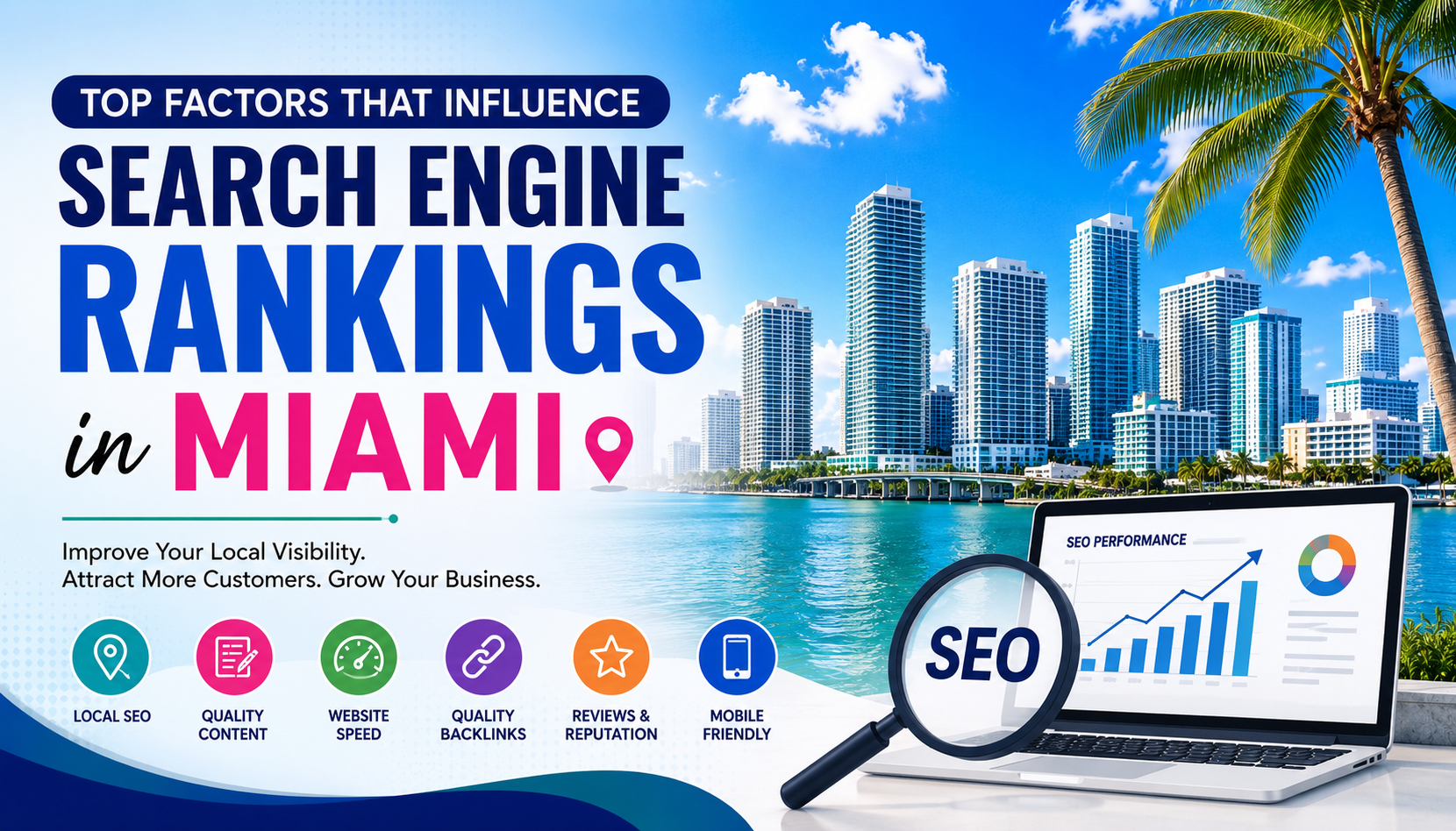
Top Factors That Influence Search Engine Rankings in Miami
If you’re a business owner in Miami, having a website is only the first step toward building an online presence. To attract local customers and stay ahead of the competition, your website needs to rank well on Google. With thousands of businesses competing for visibility, understanding the factors that influence search engine rankings is essential.
In this guide, we’ll explore the key SEO factors that can help your website achieve higher rankings in Miami and drive more local traffic.
1. Optimize for Local SEO
Local SEO is one of the most important ranking factors for businesses targeting customers in Miami. Search engines prioritize businesses that are relevant to a user’s location.
To improve your local rankings:
Claim and optimize your Google Business Profile.
Use consistent Name, Address, and Phone Number (NAP) information across all directories.
Include location-specific keywords like “Miami SEO Services” or “Web Design in Miami.”
Encourage satisfied customers to leave Google reviews.
2. Publish High-Quality, Localized Content
Content remains one of Google’s strongest ranking signals. Creating valuable, informative, and location-focused content helps establish your authority and relevance.
Ideas for localized content include:
- Miami business guides
- Local industry trends
- Event-related blog posts
- Customer success stories
- Frequently asked questions from Miami customers
Fresh, informative content encourages visitors to stay longer on your website and increases your chances of ranking higher.
3. Ensure Your Website Is Mobile-Friendly
Most local searches happen on smartphones. Google uses mobile-first indexing, meaning it primarily evaluates the mobile version of your website.
A mobile-friendly website should:
- Load quickly
- Display properly on all screen sizes
- Have easy-to-read text
- Feature simple navigation
- Include clickable buttons and contact information
A positive mobile experience improves both rankings and conversions.
4. Improve Website Speed
Page speed is a confirmed ranking factor. Slow-loading websites often experience higher bounce rates and lower user engagement.
To improve website speed:
- Compress images
- Enable browser caching
- Minimize CSS and JavaScript files
- Use a Content Delivery Network (CDN)
- Choose reliable web hosting
Fast websites create a better user experience and are favored by search engines.
5. Optimize On-Page SEO
Every page on your website should be optimized for relevant keywords without overusing them.
Key on-page SEO elements include:
- SEO-friendly page titles
- Compelling meta descriptions
- Proper heading structure (H1, H2, H3)
- Image alt text
- Internal linking
- Clean, descriptive URLs
These elements help search engines understand your content and improve your visibility.
6. Build High-Quality Backlinks
Backlinks from reputable websites act as votes of confidence for your site. The more high-quality backlinks you earn, the more trustworthy your website appears to Google.
Effective ways to build backlinks include:
- Guest blogging
- Local business partnerships
- Directory listings
- Press releases
- Publishing valuable resources others want to reference
Focus on quality over quantity when building links.
7. Maintain a Strong Online Reputation
Customer reviews influence both local rankings and consumer trust. Positive reviews signal credibility and reliability.
Encourage customers to:
Leave Google reviews
Share feedback on trusted review platforms
Rate your services honestly
Responding professionally to reviews—both positive and negative—demonstrates strong customer service.
8. Focus on User Experience (UX)
Google rewards websites that provide a positive experience for visitors.
Improve your user experience by:
- Making navigation intuitive
- Reducing intrusive pop-ups
- Using clear calls-to-action
- Organizing content for readability
- Ensuring all pages function properly
A seamless browsing experience keeps users engaged and supports better rankings.
9. Use Structured Data (Schema Markup)
Schema markup helps search engines understand your content more effectively and can enhance your search listings with rich results.
Businesses can use schema to display:
- Business information
- Reviews
- FAQs
- Services
- Contact details
These enhanced search results can improve click-through rates and visibility.
10. Keep Your Website Updated
SEO is an ongoing process. Regularly updating your website with fresh content, new service pages, and technical improvements signals that your site remains active and relevant.
Review your website periodically to:
- Fix broken links
- Update outdated content
- Improve page performance
- Add new blog posts
- Monitor keyword performance
Consistent optimization helps maintain and improve your search rankings over time.
Final Thoughts
Achieving higher search engine rankings in Miami requires more than simply adding keywords to your website. Success comes from combining strong local SEO, valuable content, technical optimization, quality backlinks, and an excellent user experience.
By consistently improving these areas, your business can increase its online visibility, attract more qualified local customers, and build long-term success in Miami’s competitive digital landscape.
Need help improving your website’s rankings in Miami? Partner with an experienced SEO team to develop a customized strategy that drives sustainable growth and delivers measurable results.